
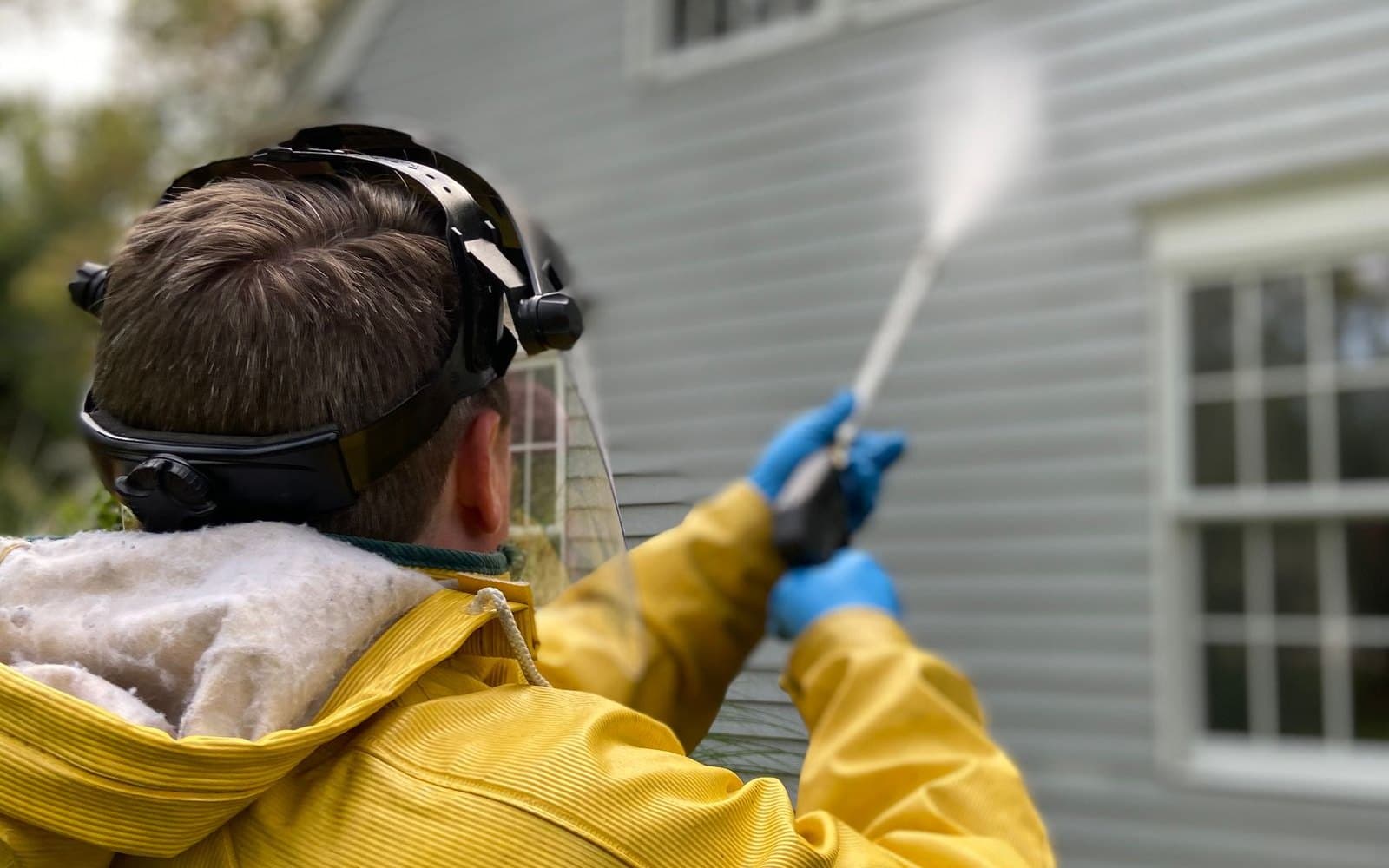
Drive through any Miami-Dade neighborhood and you can tell which driveways were cleaned this year and which were not. Green and black streaks on concrete, mildew on stucco, a dull film on pavers: it all comes from a climate that is warm, wet and shaded for much of the year. Pressure washing is the fastest way to reverse it, but done wrong it damages the very surfaces you are trying to protect.
Why South Florida surfaces get dirty so fast
Mildew and algae need moisture, warmth and shade, and Miami provides all three. Daily humidity keeps surfaces damp, tree canopy blocks the sun that would dry them, and summer rain feeds growth. Near the coast, salt spray adds a hazy layer that traps dirt. Left alone, the growth does not just look bad: it makes walkways slippery, stains porous surfaces permanently and shortens the life of paint and sealers.
How often to pressure wash
- Driveways, sidewalks and pool decks: once or twice a year, more in shaded or coastal spots
- House exteriors and stucco: about once a year, and always before repainting
- Wood fences and decks: once a year, followed by stain or sealer as needed
- Barrel-tile and other roofs: every couple of years, using low pressure and proper cleaners
- Patios, screened lanais and outdoor furniture: as needed, typically each spring
- Commercial storefronts and common areas: on a recurring schedule, often quarterly
Surfaces that need a gentle touch
Concrete and pavers can handle high pressure. Almost everything else cannot. Stucco chips and pits, painted surfaces peel, wood fibers tear and turn fuzzy, and roof tiles crack or shift when blasted at close range. Window seals, screens, soffits and light fixtures are also easy to damage. The right approach matches pressure, nozzle and distance to the material, and uses cleaning solutions to do the work instead of brute force.
Soft washing vs. pressure washing
Soft washing uses low pressure and a cleaning solution that kills mildew and algae, then rinses gently. It is the correct method for roofs, stucco, painted walls and delicate surfaces. Pressure washing uses higher pressure for hard surfaces like concrete and pavers. A good exterior cleaning job usually combines both, choosing the method for each surface rather than treating the whole property the same way.
Before painting or sealing
Paint and sealer only bond to clean, dry surfaces. Skipping the wash before an exterior repaint is one of the most common reasons paint fails early in Florida. We include a thorough cleaning in every exterior paint and deck project, then allow proper drying time before the first coat. Sealing pavers or a driveway after cleaning protects the surface and makes the next cleaning easier.
DIY or hire it out?
Rental pressure washers can handle a small driveway. The risks are technique and safety: damaging stucco or wood, injuring yourself with a high-pressure wand, or working on a ladder or a roof. For roofs, two-story exteriors, large areas or anything painted or wood, hiring someone with the right equipment and experience is usually the better value once you count the time and the risk.
Keep it on a schedule
The easiest way to keep a property clean is to stop treating it as a once-in-a-while project. A recurring exterior cleaning, timed for spring and again before the holidays or the rainy season, keeps buildup from ever getting ahead of you. We offer pressure washing on its own or as part of a property maintenance plan across Miami-Dade.
Related services
Have a job in mind? Request a free quote and let's talk about your property's specific needs.
Contact us